




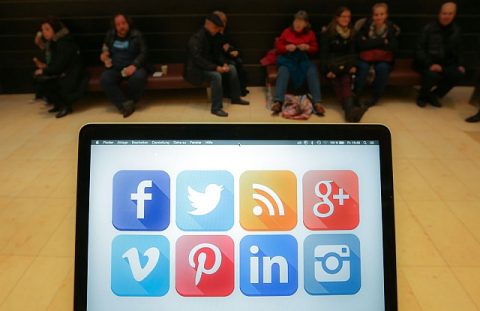
New York: This panel at the Social Media Week in New York was hosted by Added Value and brought together a series of marketing leaders across a few different industries.
This made for beautiful insight on the key focus of this event, the new land of marketing. Jonathan Hall, President of Consulting for Added Value opened up the panel with a slideshow highlighting the Top Key Shifts in the marketing world followed by panel debate and a Q/A session after his presentation.
Shifts in The Marketing World
It is well known that there is now a power shift from the brand to the consumer, with the consumer in the favor, in Denmark well known by the frase “Forbrugeren i førersædet”.
But what isn’t highlighted is the shift in the value equation. If you want your consumers to get more value from you, then you must give more value. To achieve this, brands need to stop thinking communication and start thinking content.
Here is an example:
Red Bull has built a rock solid connection with high-octane sports. Red Bull creates such a substantial amount of content that they own their own media house. They create just about every digital and traditional piece of content.
They have their own TV-station as well as a magazine. They produce documentaries, movies etc. They run over 900 domains in 36 different languages under redbull.com. Red Bull has turned into a media empire that happens to sell a beverage.
The T-Shaped attention span – consumers are scanning widely and broadly and then deep diving when they’ve found something interesting. Linear is dead.
Adaptable marketing
Brave marketers are adaptable to cater to needs and evolve. Brave enough to engage on the consumer’s terms. In a post- shop world, where penetration is king and loyalty is devalued, with massive channel integration, a consistent brand idea has never been more important.
As care takers of the brand, marketing departments will have to be flexible and take on multiple roles. You could call the trip brand manager to community manager content creator to curator.
Here is an example:
Vanity Fair Social Club held an event sponsored by L’Oreal and Chrysler. Invited 120 bloggers and online reporters. There was a vending machine powered by Twitter containing merchandise that could be purchased in exchange of tweets that used sponsored hashtags.
Innovation
Traditionally, brands want consistency and dependability. And repetition and streamlining from mass production. But with AirBnB success (the biggest hotelier in the world) it’s true that consistency isn’t what it’s used to be.
We need to learn from the startups and think with an entrepreneurial mindset. Be more disruptive and less reductive.
The Connected Generation
This event was called “Engaging Millennials In A Social World” and was hosted by Golin.
The Creative communications agency Golin created an interactive discussion with representatives from McDonald’s, Weight Watchers and Monster – three very different globally recognized brands with the same goal: engaging Millennials.
The speakers shared tips on content creation, best practices for social influencer strategy and real-time engagement, along with the responsibility marketers and communicators have to balance consumer expectations, beliefs and desires while staying true to the brand. Below are the key points:
· In 2050 75 pct. of the workforce will be millennial.
· 25 pct. of the US population are millennia’s
We must therefore answer the following question: What is a Millennial?
· D. Digitally Aware
· N. Not Brand Loyal
· A. Demanding Authenticity
Offline WOM is still important.
– You’re dealing with people’s livelihood. Of all the different age groups, the millennial cohort looked at their job as just a job and not as a career.
– Millennia’s had the hardest time with recessions and find the work field an often-bleak environment, said Matt Anchin, SVP, Global Communications, Monster Worldwide.
Millenials say they don’t want product mumbo jumbo and to be marketed to, how do you balance what you need to communicate and what the consumer wants to see?
– We let people share what is meaningful to them in Weight Watchers and then amplify that so others can relate. Meaningful tweets are reposted and this provides personal engagement across the community, said Stacie Sherer, VP Public Relations, Weight Watchers.
Millennia’s demand answers to their questions. McDonald’s has lost market share due to the loss of trust. Consumers claimed they contained no real meat and their chicken was made with pink slime. McDonalds built a case across supply chain, legal, marketing and PR to create “Our Food, Your Questions” campaign to create transparency and engagement. Some users then switched to defending the brand for the first time.
Paid Media
Organic reach being a thing in the past. Jeff Berringer, Global Digital Leader at Golin says to get ready for the organic reach on Facebook to eventually be zero.
Linking to the possibility in the future that there will be no point in posting or tweeting without monetary sponsorship. Social media managers should utilize these paid opportunities more effectively. Is it to spark engagement and let it build or just getting your message out (display ad)?
Millennia’s are so quick and good at sharing content they like immediately, that some brand strategies start with the millennial consumer in hopes to have their shared content reach the older gens.
Chanel Robinson skriver videre fra New York de kommende dage.